



 For many families who care for a senior, life gets organised around medicines, meals and hospital follow-ups. In all of this, the skin is easy to overlook, yet it is often where trouble shows up first. A patch on the tailbone turns red. It looks harmless, so nobody worries. A few days later, the skin breaks, and the family is suddenly dealing with an open wound.
Pressure sores can develop very quickly, sometimes within an hour in a person who cannot move. The good news is that most are preventable. Bedsore prevention is not complicated. It simply needs a routine that families learn before they need it.
What a Bedsore Really Is
A bedsore, also called a pressure ulcer or pressure injury, forms when skin stays pressed against bone for too long, and its blood supply is cut off. Friction and shear from being dragged across sheets, moisture from sweat or incontinence, and poor circulation all make the damage worse. A bedsore may begin as a patch of discoloured skin before progressing to an open wound or deeper tissue injury.
Who Is Most at Risk
Seniors who are bedridden or wheelchair-bound, recovering from a stroke, or living with diabetes, malnutrition or incontinence face the highest risk, and in many homes these overlap. Sores usually form where bone sits close to the skin, so the tailbone, heels, hips, elbows, shoulder blades and the back of the head deserve the closest watch.
Also Read: Why Chennai Is Becoming India's Top Senior Living Destination
4 Stages of a Bedsore
|
Stage |
What You Will Notice |
|---|---|
|
Stage 1 |
Skin is intact but stays red when pressed. It may feel warm, firm or tender. On darker skin, it can look purplish. |
|
Stage 2 |
A shallow open sore or blister. The top layer of skin is broken. |
|
Stage 3 |
A deeper, crater-like wound through the full skin, exposing fat. |
|
Stage 4 |
Deep damage reaching muscle, tendon or bone. High risk of serious infection. |
The Two-Hour Turning Routine
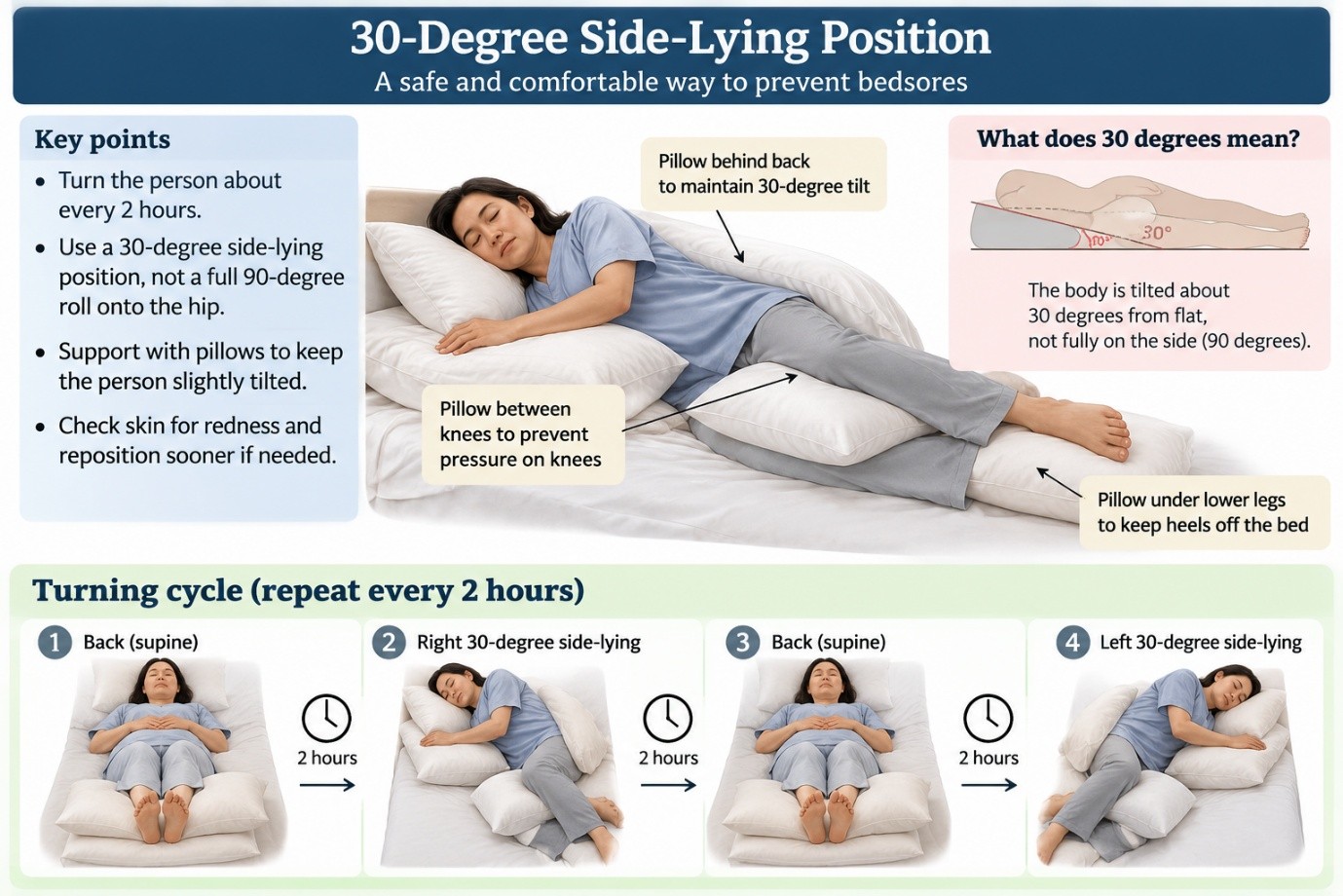
Turning is the heart of bedsore prevention. Guidelines recommend repositioning a bedridden patient about every two hours, and sooner if any area is already red.
How you turn matters just as much. Position the person at a 30-degree tilt while they lie on their side, using a pillow behind their back for support rather than rolling them fully onto their side. Repeat the cycle through the evening and night.
When family members and attenders take turns, a shared chart keeps everyone in sync.
The Right Equipment
A pressure-relieving air mattress, pillows under the calves to float the heels, and a proper wheelchair cushion all ease the load. Ring or "donut" cushions are best avoided, as they squeeze circulation around the area and can make things worse.
The Daily Skin Check
One person, usually the main caregiver, should check the skin daily, ideally during the morning wash, with a quick look at every turn. Watch for redness that does not fade when pressed, warmth or hardness, blisters, broken skin or dark patches, and pain when a spot is touched.
Tips to Look After the Skin
Healthy skin resists pressure far better.
- Cleanse skin gently with mild soap and lukewarm water, then pat dry.
- Change soiled pads promptly.
- Use a barrier cream.
- Keep linen dry and wrinkle-free, since even small folds press into fragile skin.
- Keep the patient well hydrated.
- Ensure that the patient receives balanced meals.
Dos and Don'ts
|
Dos |
Don'ts |
|---|---|
|
Turn on schedule, day and night |
Massage red or bony areas |
|
Use a draw sheet to move |
Drag the patient across sheets |
|
Float heels on a pillow |
Use donut cushions |
|
Keep skin clean and moisturised |
Apply turmeric, powders or home remedies on open wounds |
When to Call a Nurse or Doctor
Some changes need professional attention without delay. Call a nurse or doctor if you notice:
- Any break in the skin, however small
- A foul smell or discharge
- Spreading redness, warmth or swelling
- Fever, chills or sudden confusion
Also Read: Benefits of Medical Equipment at Home: Rent or Buy?
Professional Help for Wound Care
Once the skin is broken, pressure ulcer care becomes a clinical job. A trained nurse is necessary to clean and dress the wound on schedule, keep all pressure off the area and track healing at every visit, bringing in the doctor early if the wound is deep or slow to improve.
Bedridden Patient Care at Home in Chennai
Bedsores usually give a warning before they turn serious. A steady routine makes sure someone is there to notice.
Sirina Senior Care provides long-term nursing care, home nursing care and step-down care. Our nurses handle turning routines, skin checks and wound dressings, and guide families along the way.
Call +91 9025 887777, email info@sirinahealth.com or visit https://sirinahealth.com/ to plan care for your loved one.
Frequently Asked Questions About Bedsore Prevention and Care in Seniors
1. What causes bedsores in elderly people?
Bedsores develop when prolonged pressure on the skin reduces blood circulation, particularly around bony areas such as the tailbone, heels, hips and elbows. Friction, moisture, poor nutrition and limited mobility can increase the risk.
2. Who is at a higher risk of developing bedsores?
Bedridden seniors, wheelchair users and people recovering from a stroke are at higher risk. Older adults with diabetes, poor nutrition, incontinence or reduced mobility are also more vulnerable.
3. How can bedsores be prevented in bedridden patients?
Bedsores can be prevented through regular repositioning, daily skin checks, keeping the skin clean and dry, maintaining proper nutrition and using pressure-relieving mattresses and cushions.
4. How often should bedridden patients be repositioned to prevent bedsores?
A common starting schedule is repositioning approximately every two hours. However, the frequency should be adjusted based on the patient's skin condition, mobility, comfort and individual risk assessment.
5. What are the four stages of bedsores?
The four stages are:
- Stage 1: Skin remains intact but shows persistent discolouration or redness.
- Stage 2: Partial skin loss, often appearing as a shallow wound or blister.
- Stage 3: Full-thickness skin loss with visible fatty tissue.
- Stage 4: Deep tissue damage exposing or affecting muscles, tendons or bones.
6. Which body parts are most commonly affected by bedsores?
Bedsores commonly develop around the tailbone, heels, hips, elbows, shoulder blades and back of the head. These areas experience greater pressure when a person remains in one position for long periods.
7. What equipment helps prevent bedsores in elderly patients?
Pressure-relieving air mattresses, supportive pillows, heel-protection cushions and suitable wheelchair cushions help distribute body weight and reduce pressure. Donut-shaped cushions should generally be avoided.