



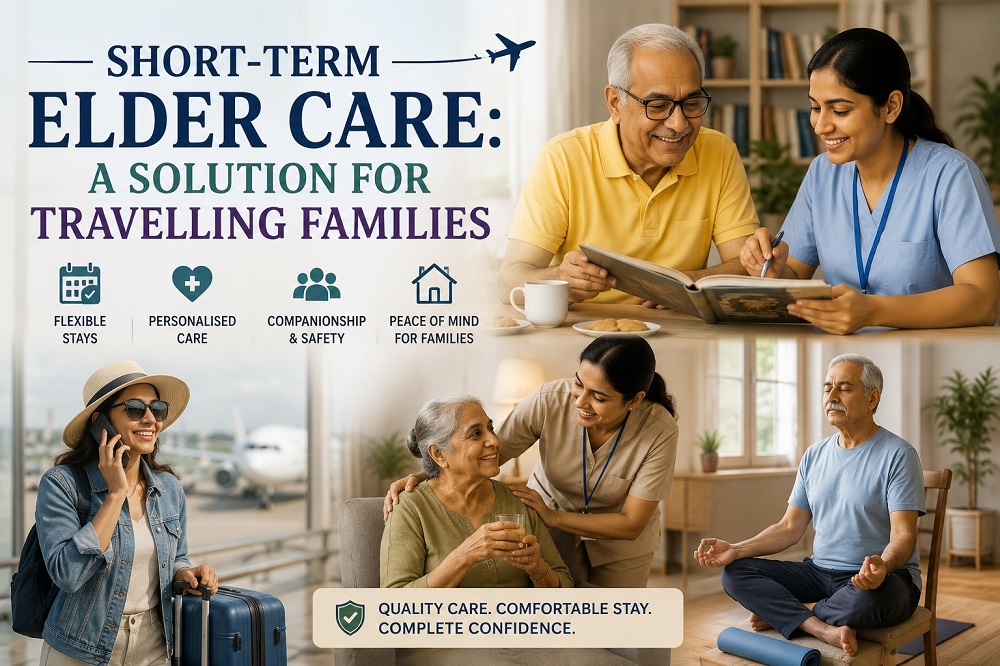
 Caring for an aging parent or elderly loved one is a major responsibility, especially for families balancing work, children, and daily commitments. But what happens when the primary caregiver is unavailable due to other obligations?
What Is Short-Term Elder Care?
Short-term elder care refers to temporary caregiving services arranged for seniors when their regular caregiver is temporarily unavailable.
These services may be provided:
- At the senior’s home
- Through live-in caregiver arrangements
- In respite care facilities
- In rehabilitation or assisted care centres
The purpose is to maintain continuity of care while the primary caregiver is not available.
Situations Where It’s Needed
Short-term elder care is especially valuable when family caregivers cannot be physically present due to other commitments or emergencies.
Common situations include:
- Work trips
- Family vacations
- Destination weddings or religious events
- Caregiver illness or hospitalization
- Caregiver travelling to support children or relatives
- Emergencies requiring sudden travel
Also Read: Second Career: How Seniors Can Help Start Ups
Types of Short-Term Care Options
Different families require different levels of support depending on the senior’s health, mobility, and independence. Common short-term care options include:
|
Care Type |
Description |
|---|---|
|
In-home care |
Caregiver visits the senior at home |
|
Live-in caregiver |
Full-time caregiver stays temporarily |
|
Overnight supervision |
Night-time safety monitoring |
|
Respite care facility |
Temporary stay in elder care residence |
|
Medical care during illness or recovery |
For seniors who are emotionally attached to their home environment, in-home care is often the preferred option during family travel.
Services Included in Temporary Care
Short-term elder care can be customized based on the senior’s daily routine and medical needs.
Personal support may include:
- Bathing and dressing support
- Mobility assistance
- Meal preparation and feeding assistance
- Help with toileting and hygiene
Health-related support may include:
- Monitoring blood pressure or sugar levels
- Managing medications
- Coordinating doctor visits
- Recovery supervision if the senior falls ill while the caregiver is away
Emotional support may include:
- Companionship and conversation
- Recreational engagement
- Emotional reassurance during family absence
This emotional support is especially important because many seniors experience loneliness or anxiety when close family members travel.
Home Care vs. Facility Care
|
Feature |
Home Care |
Facility Care |
|---|---|---|
|
Environment |
Familiar surroundings |
Structured care setting |
|
Comfort level |
Usually higher |
May require adjustment |
|
Personal attention |
One-on-one support |
Shared supervision |
|
Medical monitoring |
Based on arrangement |
Often more readily available |
|
Emotional impact |
Less disruption |
More social interaction possible |
Home care is often ideal for seniors who are stable medically and emotionally attached to familiar surroundings. Facility care may be more appropriate if the senior requires constant supervision or medical monitoring while the caregiver is away.
How to Choose the Right Option
Choosing temporary elder care requires thoughtful planning before travel arrangements are finalized.
Important factors to consider:
- The senior’s medical condition
- Fall risk and mobility needs
- Memory or cognitive concerns
- Ability to manage alone at night
- Medication complexity
- Emotional comfort with strangers or new environments
- Duration of caregiver absence
Families should also consider whether the senior would feel safer and less anxious remaining at home or in a supervised care setting.
Whenever possible, involving the senior in discussions helps reduce resistance and anxiety about temporary care arrangements.
Pre-Travel Checklist for Families
Careful preparation helps ensure smoother caregiving transitions.
Medical Preparation
- Create an updated medication list
- Share doctor contact information
- Keep insurance documents accessible
- Provide medical history and allergies
Home Preparation
- Organize medications clearly
- Remove fall hazards
- Ensure emergency numbers are visible
- Arrange extra medical supplies if needed
Care Instructions
- Share meal preferences and routines
- Explain mobility assistance needs
- Discuss sleep habits and behavioural concerns
- Provide emergency contacts for relatives and neighbours
Emergency Planning
- Identify nearby hospitals
- Arrange backup family contacts
- Ensure caregivers know how to respond during emergencies
If possible, families should introduce the caregiver before travelling so that the senior becomes familiar and comfortable in advance.
Also Read: Senior Citizen Health Insurance Plans in India: Coverage, Exclusions & Buying Guide
Benefits of Professional Care Support
Professional short-term elder care provides peace of mind for both seniors and travelling families.
Benefits for seniors include:
- Safer supervision while family is away
- Reduced loneliness and anxiety
- Better medication management
- Assistance with daily routines
- Faster response during emergencies
Benefits for caregivers include:
- Ability to travel with reduced stress
- Reduced guilt about leaving parents alone
- Support during emergencies
- Confidence that seniors are receiving professional attention
Professional caregivers can also quickly identify warning signs if the senior’s health changes unexpectedly.
Supporting Seniors with Confidence
Temporary caregiving support is not a sign of neglect. In many situations, it is one of the most responsible decisions a family can make. Caregivers also need rest, travel, medical care, and time to fulfil other family responsibilities.
Short-term elder care ensures that seniors continue receiving consistent attention and supervision even when their primary caregiver cannot be physically present.
Whether travelling for work, family obligations, emergencies, or vacations, families can feel reassured knowing their loved ones are safe, supported, and cared for with dignity until they return.
FAQs About Short-Term Elder Care
1. What is short-term elder care?
Short-term elder care is temporary caregiving support arranged for seniors when their primary caregiver is unavailable due to travel, illness, emergencies, or personal commitments.
2. Who needs short-term elder care services?
Families caring for aging parents or elderly loved ones may need temporary elder care during:
- Work trips
- Vacations
- Medical emergencies
- Family events
- Caregiver recovery periods
3. Can seniors receive short-term care at home?
Yes. In-home short-term elder care allows seniors to remain in familiar surroundings while receiving assistance with daily activities, medications, meals, and companionship.
4. What services are included in temporary elder care?
Services may include:
- Personal hygiene assistance
- Medication management
- Meal preparation
- Mobility support
- Overnight supervision
- Companionship
- Health monitoring
5. Is short-term elder care safe for seniors?
Professional short-term care improves senior safety through supervision, medication reminders, mobility assistance, and faster emergency response if health issues arise.
6. How do I choose between home care and facility care?
The decision depends on:
- Medical needs
- Mobility limitations
- Cognitive condition
- Emotional comfort
- Need for supervision
Many seniors prefer home care because it provides comfort and familiarity.