



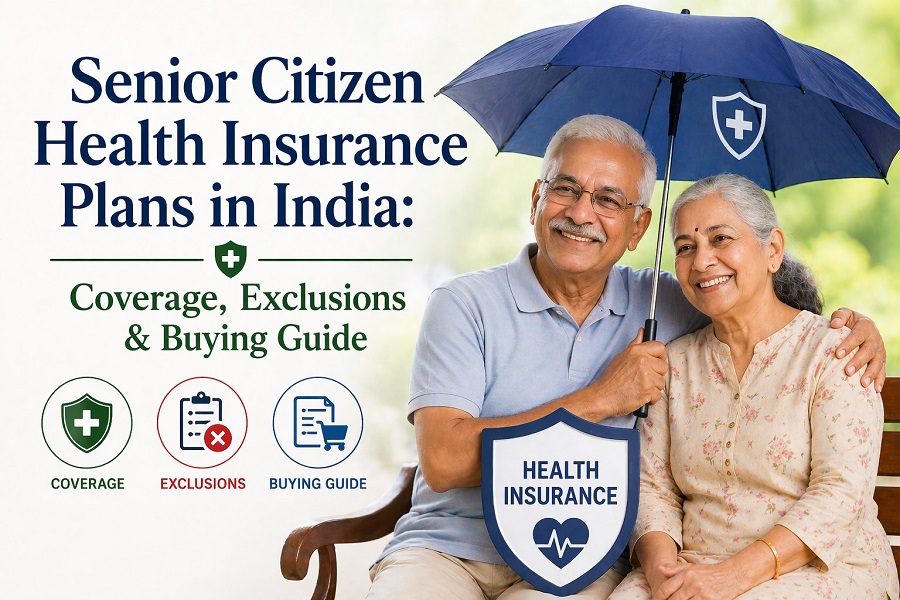
 Introduction: Clearing a Common Misconception
A widespread assumption is that health insurance will cover all aspects of elder care. In reality, most policies are designed to cover medical emergencies and hospitalisation, not the full spectrum of long-term senior care needs. Understanding what is, and isn’t, covered is essential for making informed financial decisions.
Types of Insurance Relevant to Seniors
There are several insurance options available in India, each serving a different purpose.
Key Plan Types:
- Individual Health Insurance
Covers one person with a dedicated sum insured - Family Floater Plans
Covers multiple family members under a shared sum insured (may be less ideal for older adults due to higher risk concentration) - Senior Citizen Health Insurance Plans
Specifically designed for individuals aged 60+. Features include:- Premiums aligned with age-related risk
- Tailored benefits for age-related conditions
- Critical Illness Insurance
Provides a lump sum payout on diagnosis of specified illnesses (e.g., cancer, stroke) - Top-up and Super Top-up Plans
Additional coverage beyond a base policy, activated after a deductible threshold
Comparison Snapshot
|
Plan Type |
Best For |
Key Benefit |
Limitation |
|---|---|---|---|
|
Individual plan |
Seniors with specific needs |
Dedicated coverage |
Higher premium |
|
Family floater |
Younger families |
Cost-effective |
Risk of shared limit exhaustion |
|
Senior citizen plan |
Age 60+ |
Age-specific coverage |
Waiting periods |
|
Critical illness |
Major diagnoses |
Lump sum payout |
Limited to the listed conditions |
|
Top-up plan |
Cost optimisation |
High coverage at lower cost |
Requires base policy |
What Is Typically Covered
Most senior health insurance policies focus on acute medical care.
Common Inclusions:
- Hospitalisation expenses (room rent, nursing, doctor fees)
- Surgical and ICU care
- Pre- and post-hospitalisation costs
- Usually covered for a limited period (e.g., 30–60 days before and 60–90 days after hospitalisation)
- Daycare procedures (increasingly included)
- Cataract surgery
- Dialysis
- Minor surgical interventions
Also Read: Where there is a will
What Is NOT Covered (Critical to Understand)
This is where many families face surprises. Most policies do not cover long-term or non-medical care.
Major Exclusions:
- Long-term assisted living costs
- Custodial care (help with bathing, dressing, feeding)
- Daily caregivers or attendants at home
- Chronic dementia care (unless it involves hospitalisation)
- Routine health monitoring and lifestyle support
Coverage Gap Overview
|
Expense Type |
Covered by Insurance? |
|---|---|
|
Hospitalisation |
Yes |
|
Surgery & ICU |
Yes |
|
Medicines (limited period) |
Yes |
|
Assisted living |
No |
|
Home caregiver |
No |
|
Long-term dementia care |
Mostly no |
Grey Areas to Watch
Some areas fall between covered and non-covered, depending on the policy.
Situational Coverage:
-
Home Healthcare
- Covered in select policies if prescribed by a doctor
- Often limited in duration and scope
-
Daycare Procedures
- Increasingly covered, but must be listed in the policy
-
Rehabilitation Services
- May be covered if linked to hospitalisation
- Standalone rehab is usually excluded
Tip: Always verify these clauses in the policy document rather than relying on general assumptions.
Government Schemes in India
India offers some public healthcare schemes that can support eligible seniors.
Key Schemes:
-
Ayushman Bharat
- Provides coverage up to ₹5 lakh per family per year
- Eligibility based on socio-economic criteria
-
State-Specific Health Schemes
- Vary by state
- May include free or subsidised treatment in government hospitals
Limitations of Government Schemes:
- Restricted hospital network
- Limited to specific income groups
- May not cover private or premium care facilities
Also Read: Choosing the perfect gift for your senior
Smart Planning Tips
Insurance should be part of a broader financial strategy, not the only solution.
Practical Guidelines:
-
Start Early
- Buying insurance in your 40s or 50s reduces premiums and waiting periods
-
Combine Insurance + Savings
- Use insurance for hospitalisation
- Maintain a separate fund for long-term care
-
Read the Fine Print
- Check waiting periods for pre-existing conditions
- Understand sub-limits (room rent, specific treatments)
-
Opt for Adequate Coverage
- Medical inflation in India is rising (~8–10% annually)
- Consider top-up plans for higher coverage
-
Review Policies Regularly
- Update coverage as health needs evolve
Key Decision Framework
|
Need |
Best Approach |
|---|---|
|
Emergency hospital care |
Health insurance |
|
Major illness protection |
Critical illness plan |
|
Long-term elder care |
Personal savings |
|
High medical costs |
Top-up insurance |
Conclusion: Insurance Is Support, Not a Complete Solution
Senior citizen health insurance plays a crucial role in managing unexpected medical expenses, but it does not cover the full spectrum of elder care needs.
A well-rounded plan should combine insurance, personal savings, and structured care options to ensure both financial security and quality of life. Understanding these boundaries allows families to plan realistically and avoid financial stress during critical moments.
FAQs – Senior Citizen Health Insurance in India
1. What is senior citizen health insurance?
Senior citizen health insurance is a policy designed for individuals aged 60 years and above, covering hospitalisation expenses, surgeries, and age-related medical conditions.
2. What does senior citizen health insurance typically cover?
Most plans cover hospitalisation, ICU charges, surgeries, doctor consultations, and pre- and post-hospitalisation expenses for a limited duration.
3. Does health insurance cover long-term elder care in India?
No, most health insurance policies do not cover long-term elder care services such as assisted living, home caregivers, or daily support activities.
4. What are the common exclusions in senior health insurance plans?
Common exclusions include custodial care, long-term assisted living, home attendants, routine health check-ups (in some cases), and chronic dementia care outside hospitalisation.
5. What is the difference between a senior citizen plan and a regular health insurance plan?
Senior citizen plans are tailored for older adults, with age-specific coverage, higher premiums, and specific benefits for age-related illnesses, whereas regular plans are designed for a broader age group.
6. Is it better to choose individual health insurance or a family floater for seniors?
Individual health insurance is usually better for seniors because it provides a dedicated sum insured, avoiding the risk of shared coverage being exhausted.