



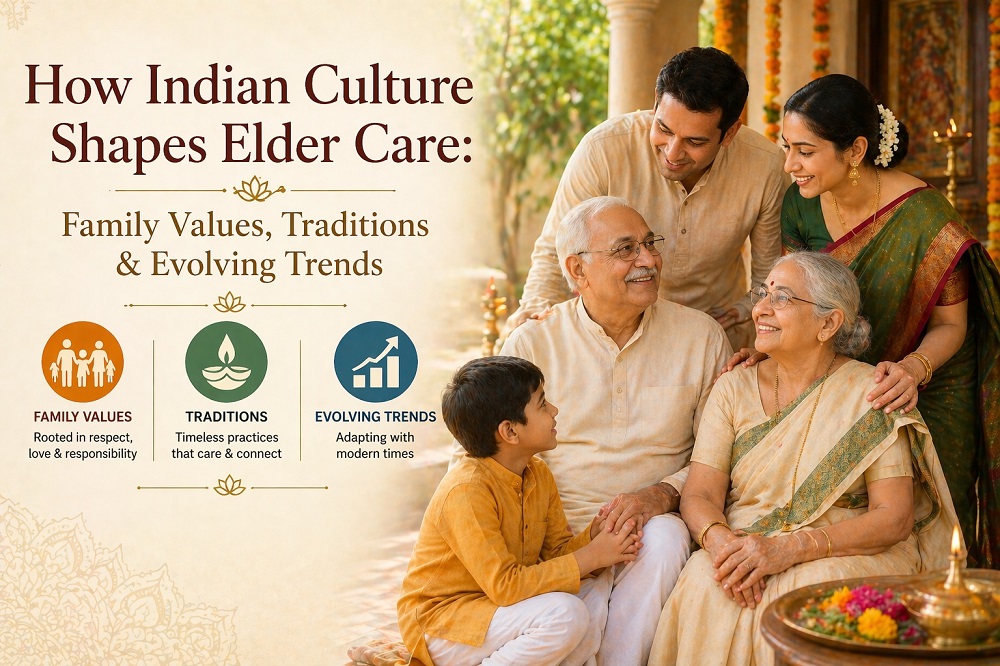
 The strains of Suprabatham floated gently from the Bluetooth speaker perched on the dining table. The Hindu lay open in Lakshmy’s hands as she reclined comfortably in her easy chair. At eighty, this quiet morning ritual, filter coffee in hand, newspaper by her side, was her cherished start to the day.
“Maya, once you’re done cooking, please call me. I’ll pack the lunch boxes.” she called out to her daughter-in-law, who moved briskly through the kitchen, determined as always to finish her chores by 8:30 a.m. before heading to work.
Lakshmy was reasonably healthy for her age, save for her troublesome knees. Yet, she insisted on helping in small ways, easing the rush of busy mornings. Maya, Mohan, and their two children doted on her, and the home hummed with an easy camaraderie. Maya, in particular, was deeply grateful for Lakshmy’s presence, for her quiet support on late workdays, and for the gentle way she guided the children through their homework.
In return, Lakshmy was cared for with equal tenderness. Ever since the passing of her husband two years ago, the family had ensured she was comfortable, both physically and emotionally. Three times a week, she walked to the nearby recreation club, just two houses away, where laughter, light games, and companionship kept her spirits buoyant.
This was, in many ways, the quintessential South Indian family: rooted, respectful, and quietly harmonious.
For generations, Indian families have revered their ageing parents. Elders were never seen as burdens, but as living libraries of wisdom, keepers of stories, guardians of values, and the moral compass guiding younger generations. This sense of responsibility was never enforced by law; it was etched deeply into the cultural fabric of India.
The Joint Family System: The Traditional Backbone of Care
There was a time when homes across cities like Chennai echoed with the presence of three generations under one roof. Responsibilities were shared, laughter was collective, and loneliness rarely found a place to dwell. When illness struck, caregiving was not a burden carried by one but a role shared by many.
This was the beauty of the Indian joint family system, a tapestry in which elder care was not a separate duty but seamlessly woven into everyday life. Grandparents were never isolated; they were surrounded by the comforting rhythm of family life, their presence acknowledged and cherished each day. Today, this system is slowly fading.
Reviving its spirit may not always be practical in its old form, but its essence - shared responsibility, emotional closeness, and respect for elders - remains deeply relevant. Especially in the context of elder care and mental well-being, the benefits of the joint family system are undeniable.
For in those earlier times, when families lived together, loneliness, the malaise of many elders today, was almost unknown.
Also Read: Essential Safety and Support Tips for Seniors Living Alone in Chennai
Changing Family Structures in Modern India
Sometime in the 1990s, something fundamental shifted. The joint family system began fragmenting, not by choice, but because geography and economics intervened. People began to move out of their hometowns for jobs.
Nuclear families became the norm. Urban migration pulled young professionals away. Video calls replaced visits. The built-in caregivers, daughters or daughters-in-law who lived there, and the sons who worked nearby, suddenly weren't available full-time.
This transformation brought emotional guilt among adult children and created a reluctant space for the emergence of professional elder care services. Home healthcare nurses, physiotherapists, and assisted living facilities - all these professions grew because families needed help, even if asking felt like defeat.
Senior Care Homes, Still a Stigma?
Senior living may be gaining acceptance, but the old stigma hasn’t completely disappeared. In many South Indian settings, the mention of an “old age home” can still create an uneasy pause, caught between modern practicality and deeply rooted cultural emotions.
But things are changing. Younger generations are reframing assisted living not as abandonment but as support. What if professional care could enhance quality rather than diminish it? What if trained nurses managed complex needs better than an untrained family?
Balancing Tradition with Practical Needs
The modern dilemma is that dual incomes aren't optional any more. Housing costs, education, and healthcare inflation require two salaries. But that means nobody's home during the day. Meanwhile, ageing has become medically complex. Managing diabetes, hypertension, and dementia requires medical knowledge. Love can't replace trained caregiving.
The emerging solution: professional care as enhancement, not replacement. Family and care work together to create an ecosystem that neither could provide alone. Modern elder care, done right, enhances dignity without replacing family.
The Role of Women in Elder Care
Traditionally, women have been the invisible backbone of the family. Now, as women pursue careers, the model has broken. For example, Anjali, a chartered accountant, is the primary caregiver for her mother-in-law with Parkinson's. She balances client meetings with medication schedules, conducts audits while monitoring physiotherapy, and responds to emails at midnight. She loves her mother-in-law, but she's also drowning.
Gender roles are changing, but expectations haven't caught up. Professional care offers relief without guilt. Hiring a caregiver doesn’t mean shirking responsibility; it in fact reduces burnout and ensures enhanced care. Families are redistributing responsibilities with sons taking on more active roles. The old model assumed unlimited female labour. The new model adjusts to reality.
Emotional Dynamics in Indian Families
Indian families don't excel at frank discussions about ageing and vulnerability. There's guilt from adult children, and suggesting help could hurt parents who sacrificed everything.
Parents, too, may resist fiercely. Accepting help feels like admitting defeat and surrendering independence maintained for seventy years.
The result? When a crisis hits, there is chaos. Conversations happen under emergency conditions, fraught with fear and stress. The healthier alternative would be early, gentle conversations about preferences and developing gradual support systems that take into account the preferences of elders.
Urban vs. Rural Perspectives
In villages around India, old ways persist. The senior has lived where she's lived for fifty years, surrounded by children who never moved far. Here, the joint family has survived. Professional care services barely exist.
But in cities, people have adapted. Seventy-year-old Revathi lives alone. A nurse comes thrice weekly for vitals. A maid handles cleaning and cooking. Her children who live abroad check in every day and are in touch with the care service.
Urban areas have higher adoption of professional care because services exist, are affordable, and are necessary. Rural and urban elder care look strikingly different, one clinging to tradition, the other improvising new models.
Also Read: Handling chronic pain as you age
The Emerging Acceptance of Professional Care
Families are beginning to accept that professional care isn't betrayal, it's a practical solution. Post-stroke physiotherapy provides better outcomes than untrained attempts. Trained nurses make fewer medication mistakes than stressed daughters managing everything alone. Today, the home health care market grows at double-digit rates because demand is real.
How Families Can Navigate This Transition
Start conversations early - don't wait for a crisis. Talk while parents are healthy about future preferences and involve seniors in decision-making.
Combine family involvement with professional care. Design hybrids - nurse during work hours, and family handles evenings and weekends.
Choose culturally sensitive providers who understand dietary requirements, respect rituals, and speak the parents' language.
Build support teams with siblings sharing responsibilities, and professional services for specialised needs.
Conclusion: Evolving Without Losing Values
Care methods are evolving, but the core values aren't eroding.
The future lies in blending tradition with modern solutions. South Indian families can maintain their inherent cultural values while leveraging professional expertise. Elders can receive cutting-edge medical care and traditional respect. Adult children can pursue careers without abandoning their parents because support ecosystems exist.
The 80-year-old grandmother on her easy chair may live in her ancestral home, her daughter's apartment, or a thoughtfully chosen facility. The setting varies. But if children still respect her, still seek her blessing, still value her wisdom, still ensure her comfort, then the essential culture hasn't been lost. It's just finding new ways to flourish.
Frequently Asked Questions About Elder Care in India
1. Why is elder care becoming a major concern in modern Indian families?
Changing family structures, urban migration, dual-income households, and children moving abroad have reduced the traditional support system once provided by joint families. As a result, many families now seek professional elder care support alongside family involvement.
2. What are the benefits of the traditional joint family system for seniors?
The joint family system offered emotional support, companionship, shared caregiving responsibilities, and reduced loneliness for elders. Seniors remained actively involved in family life and decision-making.
3. Why are nuclear families increasing in India?
Economic demands, career opportunities, urban migration, and lifestyle changes have led to the rise of nuclear families, especially in metropolitan cities.
4. Are senior care homes still considered taboo in India?
While some stigma still exists, perceptions are gradually changing. Many families now view assisted living and senior care facilities as practical solutions that provide safety, medical support, and companionship for elders.
5. How can families balance traditional values with professional elder care?
Families can stay emotionally involved while using trained caregivers, nurses, physiotherapists, or assisted living services for specialized support. Professional care can complement family care rather than replace it.
6. Why is professional elder care becoming more important?
Modern ageing often involves medical complexities such as diabetes, dementia, Parkinson’s disease, hypertension, and mobility issues. Professional caregivers are trained to handle these conditions safely and effectively.