



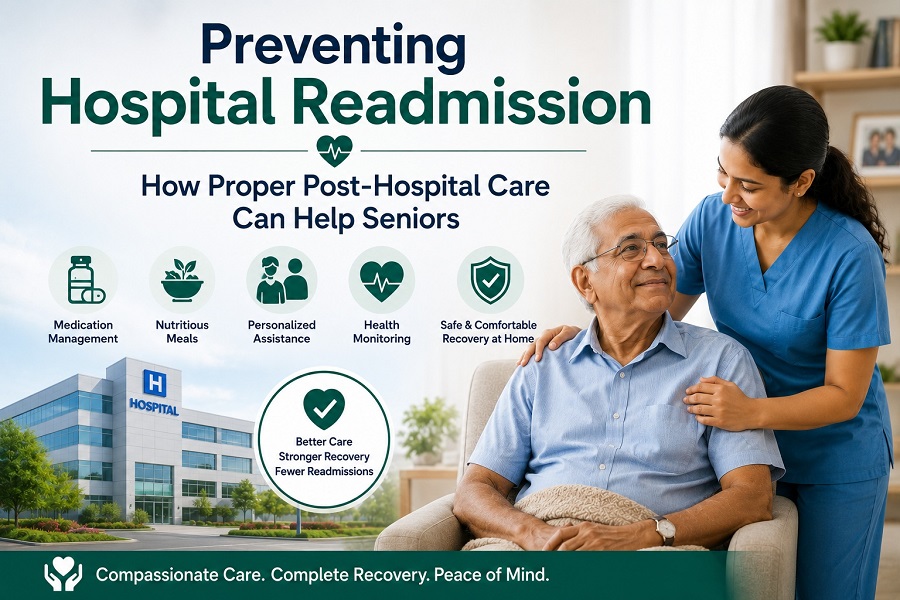
 When 74-year-old Krishnan Iyer was discharged after a week in hospital for pneumonia, his family thought the hard part was over. Ten days later, he was back in the emergency room, weaker and more frightened than before.
The days after a hospital stay are often more fragile for seniors than the hospitalisation itself. Proper post-hospital care is what makes the difference between a full recovery and a repeat trip to the hospital.
Why Recovery Is Riskier for Seniors After Hospital Discharge
Ageing bodies recover more slowly, and one hospitalisation can trigger complications a younger patient would shrug off. Some examples include:
- Reduced strength and mobility after bed rest
- Chronic conditions interacting with new medications
- Temporary confusion after anaesthesia or illness
- Limited support once family returns to work
- Difficulty remembering discharge instructions
What Is Post-Hospital Care?
Post-hospital care, or transitional care, is the structured support a senior receives after leaving hospital and before they are fully independent again. It can include:
- Nursing visits
- Physiotherapy
- Medication management
- Wound care
- Help with daily activities
Also Read: Digital Literacy for Seniors: Learning Technology Step by Step
Why Readmissions Happen
Readmissions among seniors tend to follow a recognisable pattern.
|
Reason |
Why It Happens |
|
Medication errors |
Confusion over new dosages at home |
|
Infections |
Wounds or catheters not monitored closely |
|
Falls |
Weakness after procedures or unsafe home environment |
|
Missed follow-ups |
No transport or reminder system |
How Proper Post-Hospital Care Supports Recovery
Structured care addresses each of these risks directly. For instance, structured care can help in:
- Monitoring of vital signs and wound healing
- Providing accurate medicines at the right time and dose
- Early detection of infection or fatigue
- Guided mobility that reduces fall risk
Importance of Following the Discharge Plan
Every discharge comes with a plan covering medicines, diet, and follow-ups. In the rush of bringing a parent home, families often lose track of details. A dedicated provider treats the discharge plan as a daily checklist.
The Role of Physiotherapy After Hospitalisation
Bed rest can cause muscle loss surprisingly quickly in older adults, making everyday activities such as walking, climbing stairs, or getting out of a chair more difficult. Home physiotherapy helps rebuild strength, improve balance, and restore mobility through exercises tailored to the individual's recovery stage.
When Is Home Care Not Enough?
Not every recovery can be managed at home. Situations when a higher level of support is needed can include:
- Complex wound care needing clinical equipment
- Round-the-clock monitoring after major surgery
- A home that cannot be adapted for safety
- Severe mobility limitations
- Uncontrolled pain or symptoms that need frequent medical assessment
- High risk of medication errors
- No reliable caregiver available to provide the level of support needed
Stepdown Care: A Bridge Between Hospital and Home
Stepdown care offers hospital-level supervision in a calmer setting, easing seniors who are not yet ready for home. Care intensity is gradually reduced as they grow stronger, rather than an abrupt jump from hospital bed to home sofa.
How Families Can Prepare Before Discharge
- Ask detailed questions about medicines, diet, and limits
- Arrange home or stepdown care in advance
- Adapt the home with rails and non-slip mats
- Set up a system to track medicines and appointments
Red Flags Families Should Never Ignore
- Fever, or a wound that is red or discharging
- Breathlessness, chest pain, or racing heartbeat
- Sudden confusion or difficulty waking
- A fall, however minor it may seem
Also Read: Senior Citizen Health Insurance Plans in India: Coverage, Exclusions & Buying Guide
How Families Can Stay Involved
Professional care does not mean stepping back. Families remain the emotional anchor for a recovering senior.
- Visit regularly
- Stay in touch with the caregiver for daily updates
- Watch for loneliness or low mood
- Stay involved in care decisions
- Encourage regular calls and meaningful activities
Questions to Ask a Post-Hospital Care Provider
|
Question |
Why It Matters |
|
What qualifications do the staff have? |
Ensures safe handling of medical needs |
|
How are after-hours emergencies handled? |
Confirms round-the-clock accountability |
|
Is physiotherapy included? |
Speeds up safe recovery |
|
Can care be adjusted as recovery progresses? |
Avoids paying for more than needed |
Conclusion
With a structured post-hospital care plan from day one, recovery is steadier, and the anxious cycle of readmission can be avoided. The days after discharge deserve as much attention as the hospitalisation itself. With the right support, seniors can recover fully, safely, and with dignity, at home.
Sirina Senior Care Can Help
If your loved one is recovering after a hospital stay, Sirina Senior Care offers home nursing, step-down care, home physiotherapy, doctor visits, and at-home lab tests. Reach out to plan a safe, well-supported recovery for your family.
Frequently Asked Questions About Post-Hospital Care for Seniors
1. What is post-hospital care for seniors?
Post-hospital care is the structured support a senior receives after being discharged from the hospital until they are able to safely return to their normal routine. It may include nursing care, physiotherapy, medication management, wound care, and assistance with daily activities.
2. Why is post-hospital care important for seniors?
Seniors may have slower recovery, reduced strength, medication changes, mobility problems, or other complications after hospitalisation. Proper post-hospital care helps monitor recovery, manage medications, support mobility, and identify potential problems early.
3. Why are seniors at higher risk of hospital readmission?
Common reasons include medication errors, infections, falls, missed follow-up appointments, reduced mobility, and difficulty following discharge instructions without adequate support at home.
4. What services are included in post-hospital care?
Post-hospital care may include nursing visits, medication management, wound care, physiotherapy, monitoring of vital signs, assistance with daily activities, doctor visits, and other support based on the senior's recovery needs.
5. How does physiotherapy help seniors after hospitalisation?
Physiotherapy can help rebuild strength, improve balance, restore mobility, and make everyday activities such as walking, climbing stairs, and getting out of a chair easier and safer.
6. When should a senior receive stepdown care instead of home care?
Stepdown care may be appropriate when a senior is medically stable but still requires closer supervision than can be provided at home. It can be useful after major surgery, with complex wound care, severe mobility limitations, or when round-the-clock monitoring is needed.