



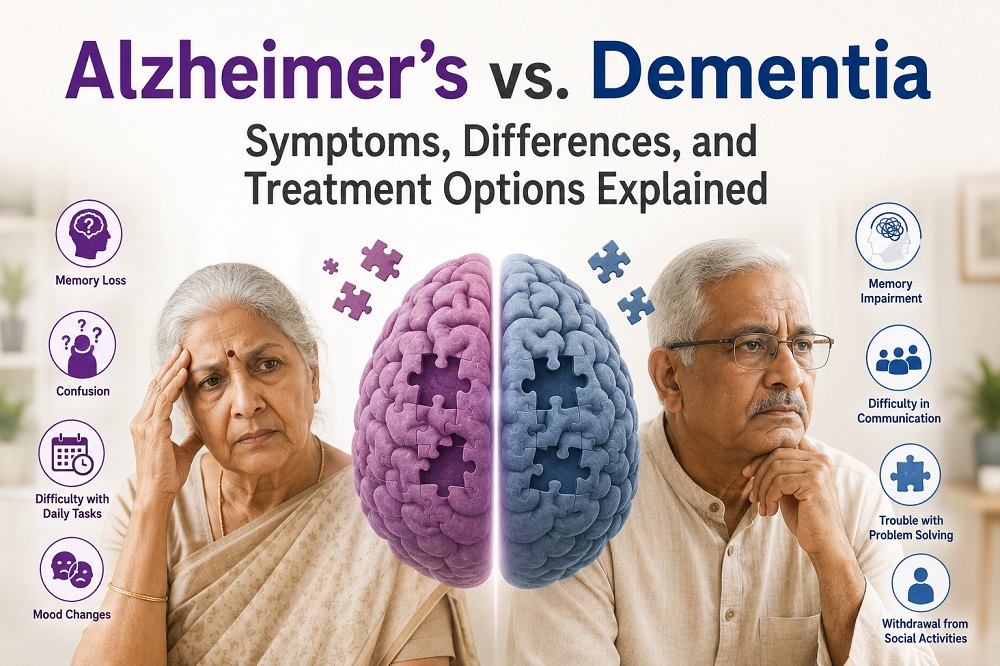
 Many families across India use the words Alzheimer's and dementia as though they mean the same thing. It is an understandable confusion. The two are closely linked, and in casual conversation the distinction rarely seems to matter. However, understanding the difference influences the questions you ask a doctor, the kind of care you plan, and the trajectory you can expect.
What Is Dementia?
Dementia is not one specific illness. It is a general term used to describe a set of symptoms caused by different brain disorders. The symptoms include problems with memory, thinking, communicating, daily functioning and more. The word dementia says nothing about the cause. It only says that cognitive function has declined to a degree that interferes with everyday living.
What Is Alzheimer's Disease?
Alzheimer’s disease is a particular brain condition, and it is the most common condition that causes dementia, accounting for approximately 60 to 80 percent of all cases. It occurs when abnormal protein deposits accumulate in the brain, gradually damaging nerve cells and disrupting communication between them. The result is a slow, progressive decline in memory, thinking, and behaviour.
Also Read: Short-Term Elder Care: A Solution for Travelling Families
Key Differences at a Glance
The simplest way to understand this: Alzheimer’s disease causes a form of dementia, but not all dementia is caused by Alzheimer’s.
|
Feature |
Dementia |
Alzheimer's |
|---|---|---|
|
What It Is |
A syndrome (a set of symptoms) |
A specific disease |
|
Causes |
Multiple possible causes |
A single, specific cause |
|
Symptoms |
Vary depending on the cause |
Follow a predictable pattern |
|
Reversibility |
Possible in some forms |
Not reversible |
|
How They Relate |
A general term for symptoms caused by different diseases |
The most common cause of dementia |
Early Warning Signs
One of the most important things a family can do is understand the difference between normal age-related forgetfulness and cognitive changes that need a medical evaluation. For instance, in many Indian households, the following changes are attributed to stress, old age, or simply absent-mindedness:
- Forgetting recent conversations
- Misplacing items
- Difficulty finding words
- Getting lost in familiar places
- Poor judgement
This is one of the most common reasons families seek help only after a significant decline has already taken place. Early evaluation is always the right step.
Also Read: Senior Citizen Health Insurance Plans in India: Coverage, Exclusions & Buying Guide
When Families Should Seek Help
There is rarely a single dramatic moment when the need for professional support becomes obvious. More often, it is a slow accumulation of small concerns. The tabular column below can help families understand when they should seek a medical evaluation:
|
Area of Concern |
What It Looks Like |
|---|---|
|
Symptoms Affect Daily Life |
Missed meals, unpaid bills, inability to manage familiar household tasks |
|
Medication Management Fails |
Wrong doses, forgotten pills, or confusion between different medications |
|
Safety Concerns Arise |
Leaving the gas on, getting lost while driving, wandering after dark, or falls linked to disorientation |
Care Options
There is no one-size-fits-all approach to dementia or Alzheimer's care. The right option depends on the stage of the condition, the individual's personality and preferences, and the family's circumstances.
- Home Care: Here, a trained caregiver provides support within the familiar environment of the individual's own home. This is often most appropriate in the mild to moderate stages and works well for seniors who are most comfortable in their own surroundings, with their own routines, language, and food.
- Day Care Centres: Structured programmes in day care centres during daytime hours provide social engagement, activities, and supervision while allowing the individual to return home each evening and giving family caregivers critical respite.
- Assisted Living: For those in moderate to advanced stages who require consistent supervision and support with daily activities, residential care facilities are a great option as they provide a structured, safe environment with trained staff.
Early Diagnosis Changes Outcomes
Dementia and Alzheimer's disease are not the same thing, but they are deeply connected, and understanding that connection gives families a clearer foundation for action. The most important message is this: early diagnosis changes outcomes. It allows families to plan while the individual can still participate in those decisions, enables medical teams to intervene when it matters most, and helps caregivers understand what lies ahead with knowledge rather than fear.
A diagnosis is not the end of quality of life. With structured support, appropriate care, and compassionate attention, many individuals with Alzheimer's and dementia continue to live with dignity, comfort, and meaning for years.
Frequently Asked Questions About Alzheimer's Disease and Dementia
What is the difference between Alzheimer's disease and dementia?
Dementia is a general term for symptoms that affect memory, thinking, and daily functioning. Alzheimer's disease is a specific brain disorder and the most common cause of dementia. In simple terms, Alzheimer's causes dementia, but not all dementia is Alzheimer's.
What are the early signs of Alzheimer's disease?
Common early signs include forgetting recent conversations, repeating questions, misplacing items, difficulty finding words, poor judgement, confusion with time or place, and trouble completing familiar tasks.
Is dementia a normal part of ageing?
No. While mild forgetfulness can occur with age, dementia is not a normal part of ageing. It involves significant cognitive decline that interferes with daily life and requires medical evaluation.
Can dementia be treated or reversed?
Treatment depends on the cause. Some forms of dementia caused by vitamin deficiencies, infections, or medication side effects may be reversible. Alzheimer's disease is not reversible, but treatments can help manage symptoms and slow progression in some individuals.
When should families seek medical help for memory problems?
Families should seek medical advice when memory loss, confusion, poor judgement, difficulty managing medications, missed appointments, wandering, or other cognitive issues begin affecting daily activities and independence.