


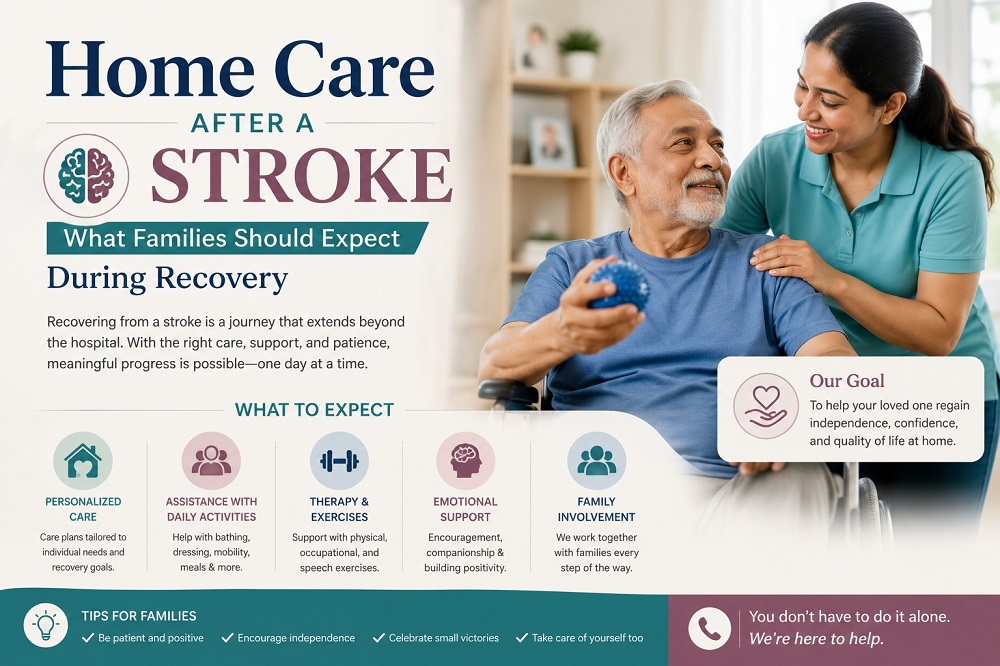
 When Meenakshi's father had a stroke last year, the hospital discharge felt less like an ending and more like the start of a longer, quieter kind of work. The scans were done, the emergency had passed, but the real recovery, the one that would unfold in the bedroom, the hallway, and the kitchen of their T. Nagar flat, was only beginning.
For most Indian families, this is the part nobody prepares them for. Recovery does not end at the hospital gate. It continues for weeks, sometimes months, at home, and understanding what that journey looks like helps families care better while keeping their expectations realistic.
Understanding Stroke Recovery
How a stroke recovery unfolds depends on several factors working together:
- Type of stroke (ischemic or haemorrhagic)
- Severity of the brain injury
- The person's age and overall health
- How quickly treatment was received after the stroke
Progress is rarely a straight line. It tends to arrive in small milestones: a finger that moves again, a word that comes out clearly, and a step taken with a little more confidence. These moments add up slowly, rather than all at once.
The First Few Weeks at Home
The early weeks bring a set of common challenges that families should be ready for. Weakness or paralysis on one side of the body, difficulty walking or maintaining balance, and speech and communication difficulties are all common, along with swallowing problems, fatigue, and low energy levels. Emotional changes such as anxiety, frustration, or low mood often show up too. These are common after a stroke, and most improve steadily with the right rehabilitation and patience.
Preparing the Home for Recovery
A few practical changes at home go a long way in preventing falls and easing daily movement:
- Remove anything that can cause trips and falls like loose wires, rugs, etc.
- Ensure accessibility of commonly-used things
- Make sure the house is well lit
- Keep frequently used items within easy reach
- Introduce mobility aids like walkers or wheelchairs if recommended
- Set up a comfortable, accessible sleeping area, ideally on the ground floor
Also Read: Short-Term Elder Care: A Solution for Travelling Families
The Importance of Rehabilitation
Structured rehabilitation is what turns a fragile recovery into a lasting one. It usually involves three kinds of support working together:
|
Type of Rehabilitation |
How It Helps |
|
Physiotherapy |
Rebuilds strength, balance, and mobility |
|
Occupational therapy |
Helps regain independence in daily activities |
|
Speech and language therapy |
Supports communication and swallowing difficulties |
Consistent rehabilitation, rather than occasional sessions, is what helps a person recover as fully as their condition allows.
Managing Daily Care
Day-to-day caregiving after a stroke covers a wide range of tasks:
- Assistance with bathing, dressing, and personal hygiene
- Safe transfers from bed to chair
- Medication management and adherence
- Monitoring blood pressure, blood sugar, and other vitals if advised
- Ensuring proper nutrition and hydration
Nutrition During Stroke Recovery
Food becomes medicine of a different kind during recovery. Families should keep a few things in mind when preparing food.
|
Types of Food for a Convalescent |
Why |
|
Soft or modified diets |
Makes eating safer for those with swallowing difficulties |
|
Heart-healthy meals with reduced salt and unhealthy fats |
Lowers the risk of another stroke |
|
Adequate protein |
Supports healing and muscle recovery |
|
Sufficient fluids |
Prevents dehydration |
|
A dietitian's guidance |
Helps when the diet needs to be more specific |
Emotional and Mental Well-Being
What often goes unspoken is how much a stroke changes the emotional landscape of a home. Mood swings and low mood are common in the person recovering, and can be just as hard on the family watching it unfold. Patience, open conversation, and continued social interaction help more than families realise. When emotional symptoms persist, it is worth seeking professional support rather than assuming it will pass on its own.
Also Read: How to Talk to Your Parents About Accepting Help
Preventing Another Stroke
Once the immediate crisis has passed, prevention becomes the quiet, ongoing work:
- Taking prescribed medications consistently
- Managing hypertension, diabetes, and cholesterol
- Quitting smoking and limiting alcohol
- Following a healthy diet and staying active within medical advice
- Keeping up with regular medical check-ups
When Professional Home Care Can Help
Many families, like Meenakshi's, reach a point where love and effort are not quite enough on their own. Professional home care becomes valuable when daily caregiving tasks become difficult to manage alone, when skilled nursing care is needed, or when rehabilitation needs to continue in a structured way. It also helps when medication schedules become complex, when family caregivers have limited time or availability, or when the risk of falls or medical complications is high.
Warning Signs That Need Immediate Medical Attention
Families should seek urgent medical care if the person experiences:
- Sudden weakness or numbness
- Difficulty speaking or understanding speech
- A severe headache
- Vision changes
- Chest pain or difficulty breathing
- Loss of consciousness
- New or worsening confusion
Tips for Family Caregivers
- Celebrate small improvements
- Be patient with the recovery process
- Follow the rehabilitation plan consistently
- Encourage independence wherever possible
- Take breaks and seek support to avoid caregiver burnout
Help In Navigating Stroke Recovery
Like Meenakshi, if your family is navigating stroke recovery, Sirina Senior Care's home nursing, physiotherapy, and post-stroke rehabilitation services are built to support that journey, with personalised care plans designed to help your loved one recover safely and regain independence at home.
Reach us at sirinahealth.com, call +91 9025 887777, or e-mail us at info@sirinahealth.com. Sirina Senior Care is based in Mylapore, Chennai, and serves families across South Chennai.
Frequently Asked Questions About Home Care After a Stroke
What should families expect during stroke recovery at home?
Stroke recovery at home is a gradual process that may involve physical weakness, speech difficulties, fatigue, emotional changes, and the need for daily assistance. Progress often happens in small milestones, and consistent rehabilitation plays a key role in recovery.
How long does stroke recovery usually take?
Recovery varies from person to person depending on the type and severity of the stroke, age, overall health, and how quickly treatment was received. While some improvements may occur within weeks, recovery can continue for several months or longer.
Why is rehabilitation important after a stroke?
Rehabilitation helps regain strength, mobility, communication, and independence. Physiotherapy, occupational therapy, and speech therapy work together to improve daily functioning and maximise recovery.
How can families make the home safer after a stroke?
Simple modifications such as removing tripping hazards, improving lighting, keeping essential items within easy reach, and using recommended mobility aids can reduce the risk of falls and make daily activities safer.
What kind of diet is recommended during stroke recovery?
A heart-healthy diet that includes adequate protein, sufficient fluids, and reduced salt and unhealthy fats is generally recommended. People with swallowing difficulties may require soft or modified foods, and a dietitian can provide personalised dietary guidance when needed.
What daily care does a stroke survivor usually need?
Daily care may include help with bathing, dressing, mobility, medication management, personal hygiene, monitoring vital signs if advised, and ensuring proper nutrition and hydration.