



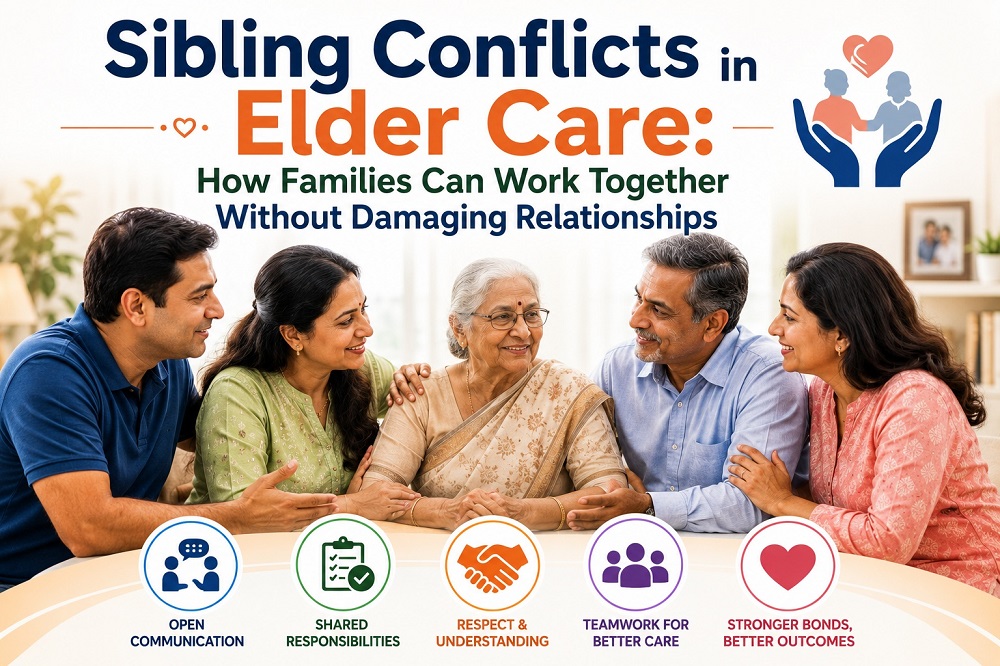
 Kamala had been living alone in her Adyar flat since her husband passed away three years earlier. At seventy-one, she managed well enough. Then, on an ordinary Tuesday, she slipped on the wet kitchen floor. Nothing broken, the doctors said. But her confidence was, and so was her daughter Priya's peace of mind.
Priya, the youngest of three and the only one in Chennai, became the de facto caregiver overnight. She managed doctor visits, medications, and physiotherapy, while fielding anxious calls from her brothers: Rajan in Bangalore, and Suresh in New Jersey. The family WhatsApp group, once used for festival photos, became a place of quiet tension.
Rajan suggested moving Amma to assisted living. Suresh offered to increase his monthly transfer. Priya, exhausted and increasingly resentful, replied with a message that would take weeks to recover from: "Sending money is easy. Being here is not."
What followed was not unusual. It is one of the most common dynamics in Indian families navigating elder care today.
Why Sibling Conflicts Happen
Unequal Responsibilities
Geography created the first imbalance. Priya absorbed the physical burden simply because she was there: the hospital runs, the medication reminders, the early morning calls when Kamala said something felt off, and more. Rajan and Suresh contributed what they could, but neither truly understood what Priya's weeks looked like. That gap in experience became an empathy gap.
Financial Disagreements
Suresh's monthly transfer was a real contribution. Rajan covered the physiotherapy bills without being asked. But Priya was not asking for money. She was asking for understanding. When one person gives time, and another gives money, both may feel they are contributing more. That feeling, left unspoken, hardens into resentment.
Also Read: Balancing Work, Kids & Elder Care: A Practical Guide for Indian Families
Guilt Takes Different Shapes
All three felt guilty, but it looked different on each of them. Suresh felt it every time he hung up, knowing he would not see Kamala for another year. Rajan felt it when he missed a hospital appointment because of a board meeting. Priya felt the guilt of resenting her brothers, whom she loved, and a mother she was wearing herself out for. Guilt that goes unexamined does not produce generosity. It produces defensiveness.
Old Patterns Returned
Somewhere in the middle of these arguments, the three of them stopped being adults managing a difficult situation and became the children they had once been. Priya was again the one left to handle things. Rajan was the one with opinions but limited presence. Suresh was the one who had moved away. These roles were not new. They were long-standing family patterns that resurfaced under the pressure of elder care.
Arguments That Sound Familiar
The words that passed between them will be recognisable to many families.
"You live nearby, so of course you should handle it."
"I'm sending money every month. What more do you want from me?"
"Amma doesn't want strangers in the house. It is not our culture."
"You chose to go abroad. You don't get to make decisions from far away."
Each statement contains a truth and a deflection. Priya was bearing an unfair load, and her brothers knew it. The concern about Kamala not wanting professional carers was real, and was also, at times, a way of avoiding a harder conversation. Families stuck in arguments like these are not really arguing about care. They are arguing about fairness, guilt, and the family they wish they were.
How Families Can Work Together
Hold a Structured Conversation
What the three of them needed was not another WhatsApp exchange but a proper conversation with a clear purpose: A structured meeting with an agenda agreed upon beforehand creates conditions for decisions rather than grievances. If the family is spread across cities, a video call that includes everyone is better than bilateral conversations that leave someone out.
Divide Responsibilities Clearly
Vague goodwill rarely survives a crisis. What would have helped Priya was not more sympathy but a clear assignment: Who coordinates with the caregiver, who attends hospital visits, who reviews bills, and who Kamala calls first in an emergency. When responsibilities are named, no one sibling ends up absorbing everything simply because they are the one who is present.
Also Read: The Evolution of Elder Care in India: From Joint Families to Professional Support
Keep the Parent at the Centre
The most useful question Priya, Rajan, and Suresh could have asked earlier is also the simplest: What does Amma actually need right now? Not what does this say about us as a family, or whose turn is it to sacrifice? When families return to that question, they often find more agreement than they expected. Much of the conflict turns out to have been about the siblings, not about Kamala.
Using Professional Care as Part of the Support System
The conversation about a professional caregiver was the one Priya had been trying to have for months. What shifted the family was a simple reframe: bringing in trained help would not replace them. It would allow Priya to stop being Kamala's healthcare coordinator and go back to being her daughter. It would give Rajan and Suresh a way to be genuinely involved rather than anxiously peripheral. Once that care was in place, the temperature in the family changed.
The Goal Is Not to Win
Families like this one are having versions of this conversation in homes across India and abroad every day. The arguments feel personal because they are. They touch love, guilt, old wounds, and the fear of not being a good enough child.
But in the middle of those arguments, Kamala was waiting: for safety, for dignity, for the quiet reassurance that the people who loved her most could still be adults in her presence.
The goal is not to win the argument. The goal is to build a care arrangement she can live well within, which the family can sustain without tearing itself apart in the process.
Frequently Asked Questions About Managing Sibling Conflicts in Elder Care
Why do sibling conflicts often arise when caring for ageing parents?
Sibling conflicts often arise because caregiving responsibilities are not shared equally. Differences in location, availability, financial contributions, and personal circumstances can create feelings of resentment, guilt, and misunderstanding.
How can families divide elder care responsibilities fairly?
Families can create a clear care plan that assigns specific responsibilities such as medical appointments, financial management, caregiver coordination, emergency contacts, and regular check-ins. Clearly defined roles help prevent one person from carrying the entire burden.
What is the most common cause of caregiver resentment among siblings?
The most common cause is unequal caregiving responsibilities. When one sibling provides most of the hands-on care while others contribute in different ways, feelings of being unsupported or unappreciated can develop.
How can long-distance siblings contribute to elder care?
Siblings living in other cities or countries can assist by managing finances, scheduling appointments, coordinating professional caregivers, handling paperwork, arranging transportation, and participating in family care discussions regularly.
Why are structured family meetings important in elder care planning?
Structured family meetings encourage open communication, clarify expectations, reduce misunderstandings, and help families make decisions based on the parent's needs rather than emotions or assumptions.
How can families reduce disagreements about elder care decisions?
Families can reduce disagreements by focusing on the senior's needs, discussing concerns openly, setting realistic expectations, documenting decisions, and involving all siblings in major care discussions.