



 Some changes happen overnight. Others happen so slowly that nobody notices until one ordinary morning it is impossible to ignore.
A Morning Like Any Other
Mr. Krishnan, 74, had lived in the same flat for three decades, spry and independent. His daughter Girija, who called from Bengaluru every evening, had stopped worrying about him years ago. He was stubborn about needing no help.
Then one Tuesday, he did not answer her call. When she finally reached him, his voice sounded shaken. He had missed a step on the stairs and sat on the landing for nearly twenty minutes before trusting his legs enough to stand.
The First Warning Signs
Girija brushed it off at first. Anyone can miss a step. But over the following weeks, she noticed small things. His knees felt "heavy" in the mornings, and he had quietly stopped his evening walk to the temple. She realised he was holding onto furniture around the house. None of these seemed urgent alone, but together, they formed a pattern she could no longer ignore.
A Visit That Told a Different Story
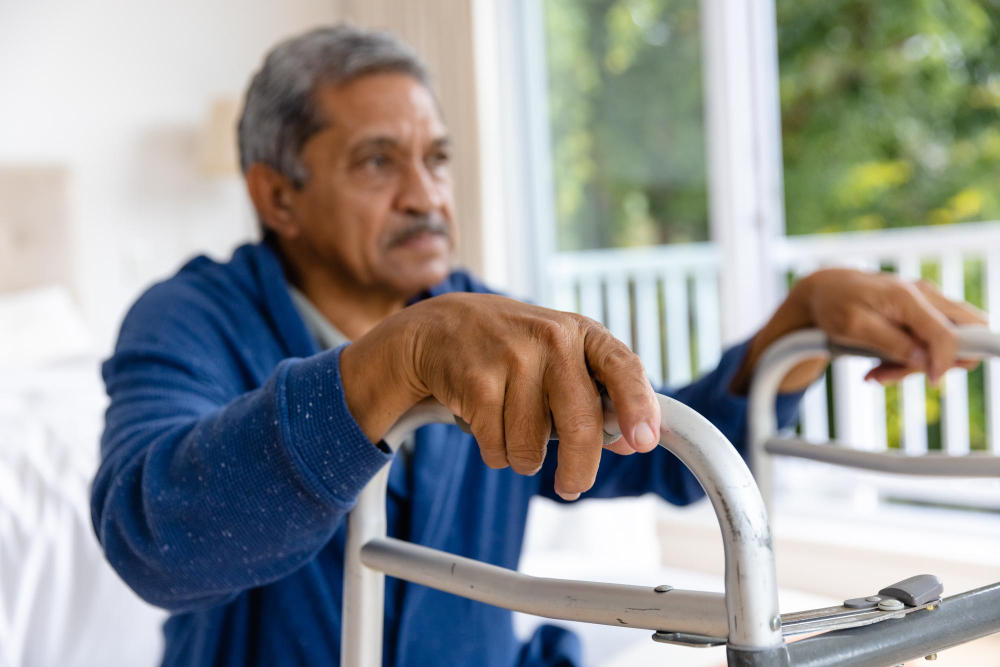
When Girija visited that month, her father, once brisk and upright, now moved carefully from room to room. He had rearranged the furniture to give himself something to hold onto. Somewhere between her last visit and this one, her father had started managing a problem alone, out of love and pride.
Unpacking the Real Problem
A doctor's visit revealed that the trouble was not just one issue but several, overlapping as they often do in older adults.
Years at his old bank job had worn down the cartilage in both knees leading to osteoarthritis. An inner ear condition was throwing off his balance, and a blood test revealed a vitamin D deficiency. His doctor explained that mobility decline rarely has one cause, which is why early signs are easy to dismiss.
Also Read: How to Talk to Your Parents About Accepting Help
The Turning Point
A few weeks later, Mr. Krishnan slipped in the bathroom and fractured his hip. The fall lasted seconds. What followed lasted months. Surgery, a hospital stay, and a recovery that tested the family's routine and finances.
Recovery Isn't Just About the Original Injury
Hip fractures are notorious for what happens after the surgery, not just during it. Mr. Krishnan needed regular physiotherapy, careful monitoring, help with daily tasks, and encouragement to keep moving even when pain made him want to stay in bed.
Recovery is as much about preventing the next fall, the risk of which rises sharply without strength training and supervised movement.
Facing the Hard Conversation
Back home, the questions multiplied. Who would be with him if something went wrong at 3 a.m.?
Girija and her brother, who both lived away, debated for weeks. A part-time attendant did not feel like enough, but moving him meant uprooting him from the neighbours he had known for decades. It was a difficult conversation, made harder by guilt neither of them wanted to admit.
Finding the Right Level of Support
What helped the family most was learning that long-term care is not all-or-nothing. It exists on a spectrum, depending on the person's condition and how much recovery is realistically possible.
Some seniors do well with home nursing care alone, others need home physiotherapy, and some benefit from daycare support that brings structure into empty hours. For those needing constant supervision, stepdown or assisted living care becomes the safer choice.
Mr. Krishnan's family settled on a combination. Home nursing support, physiotherapy, and a plan that could adjust as his strength returned.
Also Read: Short-Term Elder Care: A Solution for Travelling Families
Independence, Not Dependence
The hardest lesson for Girija was letting go of the instinct to do everything herself.
The physiotherapist explained it simply. The goal of care is not to remove all effort from her father's day, but to support him in doing as much as he safely can. Mr. Krishnan was not being managed. He was being supported in reclaiming the independence that mattered so much to him.
A Year Later
Today, Mr. Krishnan still makes his evening trip to the temple, walking stick in hand with a caregiver a respectful few steps behind. What began as a frightening fall became the reason his family finally built a support system around him, one that let him stay in the home he loves without carrying the risk alone.
How Sirina Senior Care Can Help
If a parent's slowing steps, quiet avoidance of stairs, or a recent fall has your family asking the same questions Girija once did, Sirina Senior Care can help you find the right level of support, from home nursing and physiotherapy to daycare and assisted living, all within Chennai's familiar surroundings.
Frequently Asked Questions About Mobility Decline and Senior Care
1. What are the early signs of mobility decline in seniors?
Early signs can include difficulty climbing stairs, feeling weak or heavy in the legs, avoiding walks, holding onto furniture while walking, slower movement, balance problems, and increasing difficulty getting up from a chair.
2. What causes mobility problems in older adults?
Mobility decline can have multiple causes, including osteoarthritis, balance disorders, muscle weakness, vitamin deficiencies, chronic health conditions, medication effects, and previous injuries or falls.
3. Why is it important to address mobility problems early in seniors?
Early attention can help identify underlying causes, improve strength and balance, reduce fall risks, and maintain independence. Ignoring gradual changes may increase the risk of serious falls and injuries.
4. How can families help prevent falls in elderly parents?
Families can improve home safety, remove trip hazards, install grab bars, improve lighting, encourage appropriate exercise and physiotherapy, and arrange support when a senior has difficulty walking or maintaining balance.
5. What should I do if my elderly parent has a fall?
After a fall, assess whether the senior has pain, difficulty moving, confusion, or other concerning symptoms. If there is a suspected serious injury, seek prompt medical attention rather than attempting to move them unnecessarily.
6. How does physiotherapy help seniors with mobility problems?
Physiotherapy can help improve muscle strength, balance, flexibility, coordination, and safe movement. A personalised programme can also support recovery after injuries or surgery and help reduce future fall risk.
7. Does a senior need full-time care after a fall or hip fracture?
Not every senior needs full-time care. The appropriate level depends on mobility, medical needs, recovery progress, home safety, and the availability of family support. Options can range from home nursing and physiotherapy to daycare, stepdown care, or assisted living.