



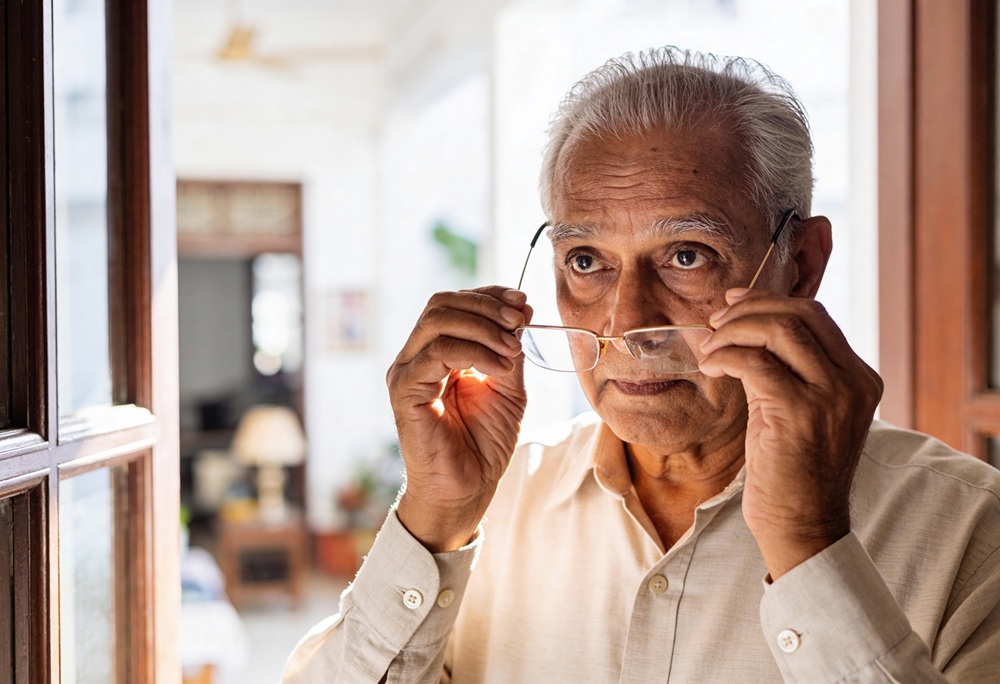
 For many seniors, aging creeps in quietly. Conversations become harder to follow and the newspaper print seems to shrink. Because hearing and vision fade so gradually, families usually adjust around the problem instead of treating it. A parent who once led every conversation now simply nods along.
But research now suggests these quiet losses deserve far more attention, because they may be linked to something families fear deeply, dementia.
What Does the Research Say
Why would ears and eyes matter to the brain? Researchers point to three likely reasons:
- Brain Overload: When sound and sight arrive blurred, the brain spends extra effort decoding them, leaving less for memory and thinking.
- Less Stimulation: Fewer conversations, less reading and fewer outings mean less daily exercise for the brain.
- Social Withdrawal: Seniors who struggle to follow conversations pull away, and isolation is itself a dementia risk.
The risk also appears to be higher when hearing and vision loss occur together, which makes treating both even more important.
Why Indian Families Wait
In India, the gap between need and treatment is wide, but it isn't the same for both senses. Families are far more willing to say yes to cataract surgery than to a hearing aid. National ageing survey data found that among older adults with hearing loss, only 4.3% used hearing aids.
Here is why one treatment feels easier than the other:
|
Factor |
Cataract Surgery |
Hearing Aid |
|
How it feels |
A fix |
A label of becoming old or "deaf" |
|
Visibility |
Nothing to wear afterwards |
Worn every day, visible to others |
|
How the loss shows |
Blurred vision is hard to ignore |
Easy to deny; others get blamed for mumbling or the TV being too soft |
|
Treatment |
One-time, day-care procedure |
Daily use with regular tuning visits |
|
Cost |
Paid once, often covered by insurance |
Ongoing upkeep and eventual replacement, rarely insured |
That doesn't mean cataract surgery happens on time. Many elders still postpone it until their vision is badly affected, and some families accept slow decline in both senses as "age catching up".
Also Read: Choosing the perfect gift for your senior
Costs of Hearing and Vision Treatments
- Basic Digital Hearing Aids: ₹12,000 to ₹35,000 per pair
- Mid-Range Hearing Aids: ₹35,000 to ₹90,000 per pair
- Premium Hearing Aids: ₹2,50,000 and above per pair
- Cataract Surgery in Chennai: ₹30,000 to ₹1,00,000 per eye, depending on lenses and procedure
Why a Gentle Push Matters
Even when the signs are obvious, many seniors may not ask for help on their own. Some genuinely do not notice how much they are missing, because the decline has been so slow. Others notice but stay quiet. They worry about the cost falling on their children, dread hospitals and surgery, or fear that admitting a problem will lead to losing their independence.
This is where families make the difference. It is up to them to notice the signs, raise the subject gently and in private, and offer to book the appointment and go along. Frame the topic as a way to help them stay independent longer, not as a sign of decline. Here are some tips to help your elderly loved one seek support with confidence.
Also Read: Malnutrition in seniors is cause for concern
Getting Ready for Cataract Surgery
|
Step |
What to Do |
|
Stabilise sugar and BP |
Uncontrolled diabetes or blood pressure can delay surgery. Aim for steady readings in the weeks before. |
|
Review every medicine |
Share the full list, especially blood thinners, with the surgeon. Never stop a medicine without medical advice. |
|
Get the full quote |
Ask about lens type, total cost in writing and what insurance will pay. |
|
Arrange an escort |
Your parent should not travel alone on surgery day. |
|
Prepare the home |
Clear walkways, brighten lighting and keep a written eye drop chart ready. |
|
Own the drop schedule |
Eye drops are often needed several times a day for weeks. Assign one person to manage them. |
Helping a Parent Settle into Hearing Aids
- Test First, Buy Later: Start with a proper audiologist assessment, not a counter purchase.
- Go Slow: Begin with wearing a hearing aid for a few hours a day at home, and then build up over the weeks. Everyday sounds may feel loud at first.
- Return for Tuning: The first fitting is rarely the final one.
- Make It Normal: Speak face to face, cut background noise, and never joke about the device.
Clearer Senses, Sharper Days
Hearing and vision problems are among the most treatable parts of ageing. A hearing assessment is quick and painless, and cataract surgery is usually a day-care procedure.
If a parent is withdrawing, getting forgetful or skipping conversations, check their ears and eyes before blaming age or mood. It may be the most practical brain-health step your family takes this year.
How Sirina Senior Care Can Help
At Sirina Senior Care, we support families through every stage, from doctor visits at home and nursing care after cataract surgery to home physiotherapy sessions that reduce fall risk and ambulance services for appointments.
Call +91 9025 887777, email info@sirinahealth.com.
FAQs on Hearing Loss, Vision Problems, Hearing Aids and Dementia Risk in Seniors
1. Can hearing loss and vision problems increase the risk of dementia in seniors?
Yes. Research suggests that untreated hearing and vision loss may be associated with an increased risk of dementia. Reduced sensory stimulation, social isolation and the extra effort required to process sounds and images may affect cognitive health.
2. How does hearing loss affect brain health in older adults?
Hearing loss can make it harder for seniors to follow conversations and understand sounds. This may increase cognitive effort, reduce social interaction and contribute to isolation, which are associated with cognitive decline.
3. Can cataracts increase the risk of dementia?
Studies suggest that untreated cataracts and visual impairment may be associated with a higher risk of cognitive decline. Cataract surgery can improve vision and everyday functioning, although it cannot guarantee dementia prevention.
4. What are the early signs of hearing loss in senior citizens?
Common signs include frequently asking people to repeat themselves, increasing television volume, struggling to follow group conversations, misunderstanding words and withdrawing from social gatherings.
5. When should an elderly person consider using a hearing aid?
Seniors who experience difficulty hearing conversations, understanding speech in noisy environments or following everyday communication should undergo a hearing assessment. An audiologist can determine whether hearing aids are appropriate.
6. How much do hearing aids cost in India?
Hearing aid prices vary depending on technology, features and brand. Basic digital models may cost around ₹12,000 to ₹35,000 per pair, mid-range models ₹35,000 to ₹90,000, and premium models ₹2,50,000 or more per pair.
7. What are the common symptoms of cataracts in elderly people?
Common symptoms include blurred or cloudy vision, difficulty seeing at night, sensitivity to bright lights, faded colours, frequent changes in spectacle prescriptions and difficulty reading.