



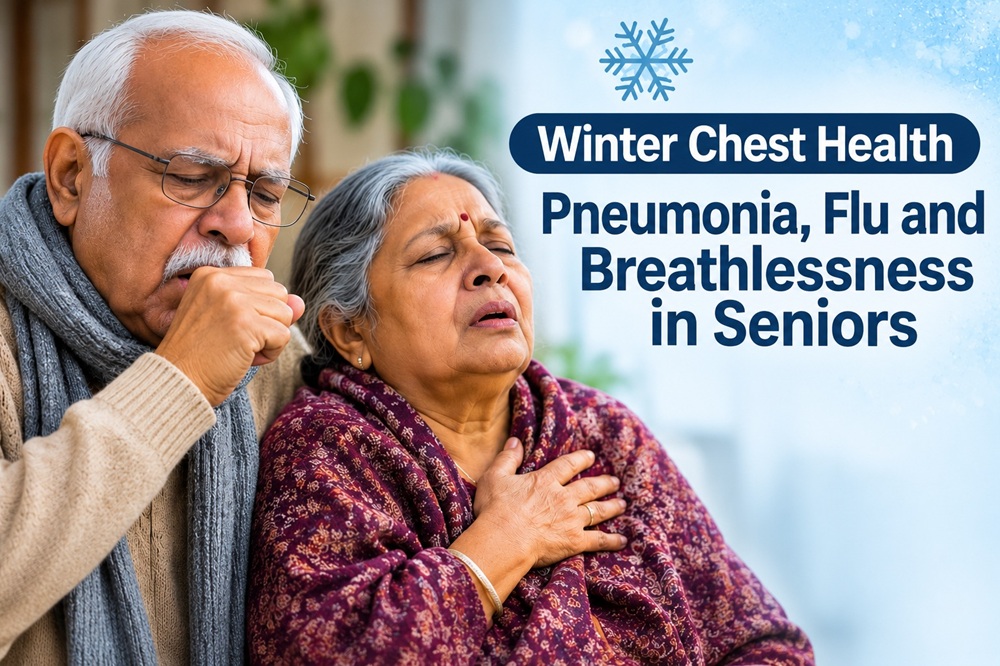
 In Chennai, the northeast monsoon brings with it damp mornings and cool nights. For older lungs, this is a testing season. In seniors, a simple flu can slide into pneumonia far faster than most families expect.
World Pneumonia Day, observed on 12 November with this year’s theme of “A New Era of Pneumonia Control”, is a timely reminder that pneumonia is largely preventable and treatable when detected early.
Why Older Lungs Struggle More
As we age, the immune system slows down, and the cough reflex weakens, so mucus and germs are not cleared as efficiently as before. Certain health conditions push the risk higher still, and seniors are especially vulnerable if they:
- Live with diabetes, COPD, asthma, heart disease or kidney disease.
- Have difficulty swallowing, common after a stroke or with dementia.
- Are bedridden or largely inactive, since lying still lets fluid settle in the chest.
- Have recently been hospitalised or are still recovering from flu.
Flu, Pneumonia and How One Leads to the Other
Flu (influenza) is a viral infection of the nose, throat and airways that usually brings fever, body aches, and exhaustion. Pneumonia, on the other hand, affects the lungs, causing the tiny air sacs to fill with fluid or pus, making it difficult for oxygen to pass into the bloodstream.
The two are closely linked because flu weakens the airways and opens the door to bacteria, most commonly pneumococcus. So when a senior seems to be recovering from flu and then suddenly gets worse, it deserves a closer look.
The Signs Families Often Miss
In older adults, the classic signs of high fever, chesty cough and chills are often mild or missing altogether. Instead, the infection tends to show up as a change in behaviour or energy, which families put down to age.
|
What You Might Expect |
What You May Actually See |
|---|---|
|
High fever |
Normal or even lower-than-usual temperature |
|
Persistent cough |
Little or no cough |
|
Feeling unwell |
Sudden confusion, forgetfulness or talking out of context |
|
Tiredness |
Unusual drowsiness, sleeping through meals |
|
Breathlessness on exertion |
Faster breathing even while resting |
|
Body ache |
A fall, unsteadiness or new weakness in the legs |
Breathlessness that is new, sudden or getting worse always needs attention, and a home pulse oximeter is one of the most useful things to keep in a senior’s medicine cabinet this season.
Also Read: Monsoon Health Checklist for Seniors in Chennai - Dengue, Fever and Hydration Tips
When to Call a Nurse or Head to the Hospital
Not every cough needs an emergency room, but some situations simply cannot wait.
|
Call a Nurse or Doctor at Home |
Go to the Hospital Immediately |
|---|---|
|
Mild cough, cold or low-grade fever |
Severe breathlessness or gasping for air |
|
Eating and drinking less for a day |
Confusion that is sudden or getting worse |
|
Slightly faster breathing, but alert and talking |
Very drowsy or hard to wake |
|
Recovering from flu, but not improving |
Chest pain, or oxygen levels falling quickly |
|
Weaker or more tired than usual |
Bluish lips, unable to keep fluids down |
A home nurse can check temperature, blood pressure and oxygen levels, listen to the chest, arrange at-home blood tests and keep the doctor informed. When in doubt, though, especially if your parent has heart or lung disease, go to a hospital, because it is always the safer call.
Vaccines That Protect Through the Season
Two vaccines make the biggest difference for seniors.
- Pneumococcal Vaccine: This protects against the bacteria behind many cases of pneumonia. Indian guidance has recommended it for adults aged 65 and above, as well as those aged 60 and above with chronic illnesses. The appropriate vaccine type and schedule should be determined by the doctor.
- Influenza Vaccine: This is needed every year, as flu strains keep changing. The Association of Physicians of India recommends annual flu vaccination for adults aged 60 and older.
Yet, very few Indian seniors actually get vaccinated. A multi-city study that included Chennai found only 1.4% of older adults had ever had a flu shot.
Speak to your parents’ doctor about senior vaccinations before this season goes any further, because one conversation could prevent a hospital stay.
Also Read: Simple exercises for people over 75
Small Habits That Protect Older Lungs
- Encourage visitors and grandchildren to wash their hands frequently.
- Keep rooms dry and aired, since damp walls and mould irritate the lungs.
- Encourage warm fluids and regular meals, even when appetite dips.
- Brush teeth and clean dentures daily, as mouth bacteria can travel to the lungs.
Breathing Easier This Season
Chest infections in seniors rarely announce themselves at the start, and they tend to whisper long before they shout. Families who notice the quiet signs, keep vaccinations up to date and know when to call for help give their elders the best chance of a full recovery.
Sirina Senior Care supports families across South Chennai with home nursing care, doctor visits, at-home lab tests, medicine delivery and ambulance services, so help reaches your loved one before a small concern becomes an emergency.
Call +91 9025 887777, email info@sirinahealth.com.
Winter Chest Health in Seniors: FAQs on Pneumonia, Flu and Breathlessness
1. Why are senior citizens more vulnerable to pneumonia during winter and monsoon?
As people age, their immune system and cough reflex become weaker, making it harder to clear mucus and fight infections. Conditions such as diabetes, COPD, asthma and heart disease further increase the risk of pneumonia.
2. Can flu develop into pneumonia in older adults?
Yes. Influenza can weaken the respiratory system and make older adults more vulnerable to secondary bacterial infections, including pneumonia. Seniors who worsen after initially recovering from flu should receive medical attention.
3. What are the early warning signs of pneumonia in senior citizens?
Early signs may include unusual tiredness, sudden confusion, loss of appetite, increased breathing rate, weakness, drowsiness and breathlessness. Some seniors may not develop a high fever or persistent cough.
4. Can elderly people have pneumonia without a fever or cough?
Yes. Older adults may develop pneumonia without typical symptoms such as high fever, chills or a persistent cough. Sudden confusion, unusual sleepiness, weakness or changes in behaviour may be the only noticeable signs.
5. When should a senior citizen with breathing difficulties be taken to the hospital?
Seek immediate medical attention if a senior experiences severe breathlessness, chest pain, bluish lips, rapidly falling oxygen levels, sudden worsening confusion or difficulty waking up. Do not delay emergency care while waiting for a home visit.
6. How does a pulse oximeter help monitor pneumonia in seniors?
A pulse oximeter measures blood oxygen saturation (SpO2) and pulse rate. It can help families identify low oxygen levels at home. However, normal readings do not rule out pneumonia, and worsening symptoms require medical evaluation.
7. Which vaccines help prevent pneumonia and flu in older adults?
Pneumococcal and annual influenza vaccines are important for protecting seniors. Pneumococcal vaccination helps prevent infections caused by certain pneumococcal bacteria, while the annual flu vaccine reduces the risk of influenza and its complications. A doctor can recommend the appropriate vaccination schedule.