



 Caring for an ageing parent is tiring in ways few people talk about. Beneath it lies a question most families never say out loud. If we get outside assistance, are we letting them down?
This is a common quandary faced by children with ageing parents. Our earlier posts on The Evolution of Elder Care in India and The Myths Around Ageing and Senior Care looked at this shift across India. This one brings it home.
For Kavitha, the dilemma arrived with the monsoon. She was at work when her father, Mr. Natarajan, 75, slipped on the wet bathroom floor. Her mother’s knees were too weak to help him up. It was a harrowing experience.
After hearing what had happened, the doctor suggested assisted living. Later that evening, Kavitha looked up a few places, but shut her laptop quickly because she felt guilty.
The Verdict from the Family Circle
News travels fast in a Tamil family. Kavitha had mentioned the idea to one cousin, yet by the next weekend, at a wedding in Mylapore, her periyamma took her aside to remind her that in their family, parents were never sent away. Soon, the family WhatsApp group had opinions, and an uncle forwarded a video about lonely old people in homes.
None of them had helped Appa off the bathroom floor or sat with Amma through her sleepless nights of knee pain. Yet their judgment carried enormous weight because, in many Indian families, what people say is more important than what the family needs.
Untangling Love from Obligation
Kavitha's guilt had deep roots. She had grown up watching her mother care for her grandmother at home, without help. Seva, serving one's elders, was simply the air the household breathed, and as the eldest daughter, she had always assumed the duty would be hers.
But Appa now needed help bathing, careful monitoring of his medication and physiotherapy to rebuild his balance. Amma needed help too, and was exhausting herself trying to look after him. Kavitha was trying to be a nurse, daughter and a full-time employee all at once, and was quietly struggling at all three.
This is where guilt can be misleading. Feeling guilty does not mean you are doing something wrong. In fact, leaving a parent without the care they need would be far more concerning. Arranging trained support to ensure they are safe, comfortable and well cared for is not neglect; it is another way of looking after them.
Also Read: What is Assisted Living
Over Filter Coffee, Not Under Pressure
Kavitha's first instinct was to choose a place quietly and present it as settled. A friend reminded her that the decision belonged to her parents.
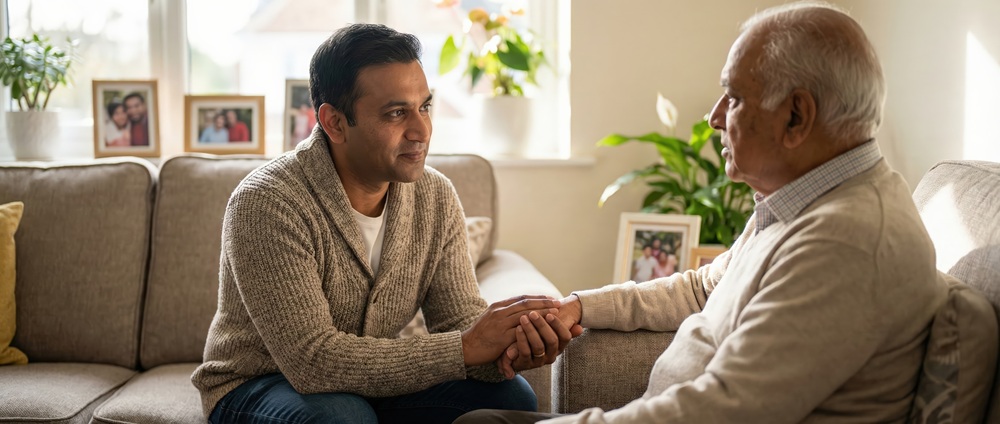
So, one Sunday morning over filter coffee, she simply asked her parents how they felt about assisted living. Appa admitted he was afraid he was becoming a burden. Amma said quietly that she had one condition: wherever they went, they would go together.
That settled the biggest question. The three of them visited two facilities, asking about shared rooms, the food and the prayer hall. They agreed to begin with a short stay, with the option to come home.
Dealing with the Well-Meaning Critics
Kavitha called her brother first. If the siblings did not stand together, every objection would find a crack to settle into.
When periyamma raised the subject again, Kavitha did not argue. She explained that both parents needed care the family could not safely give at home, and that they had chosen the place themselves. Then she invited periyamma to visit.
Most critics are not trying to wound. They are imagining care homes as they used to be, and seeing how they have changed can be more convincing than any argument.
Also Read: Handling chronic pain as you age
Support, Not Surrender
Three months later, periyamma came to visit. She found Amma and Appa in their shared room, comfortable and happy. Appa was walking without a stick. Amma's knee pain was being managed properly for the first time in years, and she had made friends in the evening bhajan group.
Kavitha visited every weekend. Freed from being their caregiver, she could simply be their daughter again.
Assisted living is not the last resort families reach for when love runs out. It is a layer of trained support that frees love to do what it does best. The family does not step away. It steps into a warmer, less strained role.
Care That Keeps Families Close
Asking for help, Kavitha now understands, was not the moment she let her parents down. It was the moment she made sure they would be cared for, together.
If your family is facing the same question, Sirina Senior Care can help you find an answer that keeps everyone close. Our assisted living services in Mylapore combine round-the-clock nursing, physiotherapy and a homely setting, with families involved at every step. Call +91 9025 887777, email info@sirinahealth.com
FAQs on Assisted Living, Parental Guilt and Social Stigma in Elder Care
1. Is choosing assisted living for ageing parents considered abandonment?
No. Choosing assisted living does not mean abandoning elderly parents. It is a way to ensure they receive professional care, medical attention, daily assistance and a safe living environment while families continue to remain involved in their lives.
2. Why do children feel guilty about moving their elderly parents into assisted living?
Many children associate caring for parents with personal responsibility and traditional family values. Fear of social judgment, emotional attachment and the belief that parents should always live with their children can contribute to guilt.
3. How can families overcome the social stigma associated with assisted living in India?
Families can overcome social stigma by understanding the benefits of professional elder care, discussing their parents' needs openly and explaining that assisted living provides additional support rather than replacing family relationships. Visiting facilities can also help relatives understand modern senior care.
4. How do you know when ageing parents need professional care?
Signs include frequent falls, difficulty managing daily activities, missed medications, reduced mobility, persistent health concerns and the inability of family members to provide consistent care. A doctor's assessment can help determine the appropriate level of support.
5. How can children discuss assisted living with elderly parents without hurting their feelings?
Choose a comfortable, private setting and approach the conversation with empathy. Explain your concerns about their safety and well-being, listen to their preferences and involve them in visiting and selecting facilities. Avoid presenting the decision as something already finalised.
6. Should elderly parents be involved in choosing an assisted living facility?
Yes. Their preferences should be central to the decision whenever possible. Families should discuss room arrangements, food, medical facilities, daily activities, religious preferences, privacy and opportunities to stay connected with loved ones.